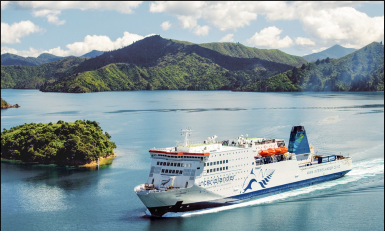
A degraded rubber expansion joint failed putting 864 people on board passenger vessel Kaitaki at risk, according to New Zealand’s Transport Accident Investigation Commission (TAIC).
TAIC has released its final report three years after the Interislander ferry suffered a blackout and loss of propulsion while carrying out a scheduled service between from Picton to Wellington.
The incident on 28 January 2023 left the ship drifting in strong onshore conditions towards Sinclair Head on Wellington’s south coast. The master issued a Mayday. The ship avoided grounding after anchors held and power was restored.
The immediate cause was the failure of a single degraded component in a safety-critical system. A rubber expansion joint (REJ) in the engine cooling system ruptured, causing the system to lose most of its water and automatically shut down the engines. The component had exceeded its recommended service life and age limits.
The rubber expansion joint had been in service for at least five years and was approximately 18 years old.
Had Interislander implemented the FMEA recommendations, most importantly replacing all REJs every two years, it is very likely that the reliability of the REJs would have been assured.
TAIC identified six safety issues and made five formal recommendations for safety-focused change following its inquiry into the incident.
TAIC’s Chief Commissioner David Clarke says the failure highlights the importance of managing ageing components in critical systems.
“Safety-critical parts can fail. But their age and condition should be monitored and must be actively managed. In this case, a single component, overdue for replacement, failed and disabled a ship’s propulsion, putting at risk the vessel and the 864 people on board.”
In addition to appropriate management of safety-critical components, the Commission’s final report discusses five other safety issues:
- Effectiveness of Interislander’s safety management system for on-board engineers
- Evacuation standards for older ships
- Emergency response coordination across agencies
- Access to specialist maritime expertise and decision-making support
- Emergency towage and salvage capability for New Zealand
The Commission made five recommendations to strengthen system-wide safety.
Two recommendations are for KiwiRail to improve preparation and management of engine room emergencies, including implementing and exercising decision-support tools for engineers.
Three recommendations are for Maritime New Zealand. They focus on evacuation planning for passenger ferries, national maritime incident readiness and response arrangements, and emergency towage and salvage capability in New Zealand waters.
“While multiple agencies responded to the incident, there were gaps in shared situational awareness and in how response plans were understood and exercised together,” said Mr Clarke.
“In a major maritime emergency, coordination can’t be improvised. All agencies must share the same plan, understand their role, and have practiced working together under pressure.”
Download the PDF: TAIC-MO-2023-201-Kaitaki